

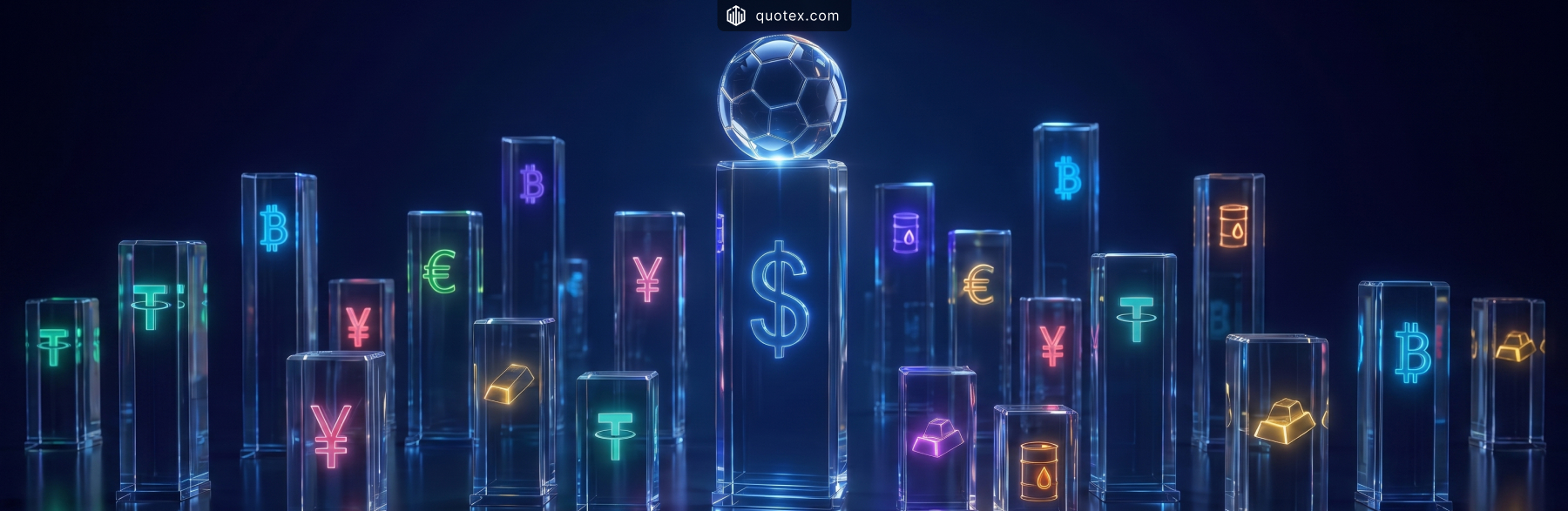

What to Trade During FIFA World Cup 2026: The Best Assets to Watch and Why They Move


 Copy link


 7 min read
Every four years, the FIFA World Cup captures the attention of billions of people around the globe. Stadiums fill up, social media explodes with predictions, and millions of fans adjust their daily routines around match schedules.
Traders, however, tend to watch something a little different.
Investor sentiment shifts, consumer spending changes, tourism increases, media companies see record audiences, and certain industries experience bursts of activity. All of this can create short-term price movements across different asset classes.
In this guide, we’ll look at the assets that deserve the most attention during the FIFA World Cup 2026, explain why they sometimes move during major sporting events, and show how traders can approach these opportunities without relying on hype alone.
Why Major Sporting Events Matter to Financial Markets
When investors become more optimistic, they’re often willing to take on more risk. During periods of uncertainty, they usually move money into safer assets. This constant shift in market psychology influences prices every day.
Major global events can amplify these emotional swings. Elections, geopolitical developments, natural disasters, and even unexpected sporting results can temporarily change investor behavior. While these reactions are rarely long-lasting, they often create the kind of short-term volatility that active traders look for.
The key is understanding which assets are most likely to react and which ones probably won’t.
Forex Pairs That Often React During the World Cup
The foreign exchange market is usually the first place traders look during major international events. It’s important to keep expectations realistic. A football match doesn’t directly strengthen or weaken a country’s currency. Exchange rates are still driven primarily by interest rates, inflation, economic growth, and monetary policy.
However, the World Cup can influence short-term trading through changes in investor sentiment, consumer spending, tourism, and market psychology. When these factors overlap with existing economic trends, currency pairs may become more volatile than usual.
Here are the currencies worth watching.
European Currencies
Some of the world’s biggest football nations are located in Europe, and their matches attract enormous global audiences.
Popular pairs include:
- EUR/USD
- GBP/USD
- EUR/GBP
Countries like England, Germany, France, Spain, Portugal, Italy, and the Netherlands generate massive media coverage throughout the tournament.
European stock markets also remain highly active during the tournament, and positive consumer sentiment can sometimes support sectors tied to retail, entertainment, and tourism. For short-term traders, this may translate into higher intraday volatility around important matches, especially when other economic news is released on the same day.
Latin American Currencies
Football is deeply connected to Latin America, making currencies from the region particularly interesting during the World Cup.
Two examples stand out:
- Brazilian Real (BRL)
- Mexican Peso (MXN)
Brazil consistently enters the tournament as one of the favorites, drawing enormous international attention. During successful World Cup campaigns, local optimism can support consumer spending and increase trading activity in domestic financial markets, although these effects are typically temporary.
Mexico deserves even more attention during the 2026 tournament because it is one of the three host nations. Millions of visitors, increased tourism, hospitality spending, and global media exposure can all contribute to higher economic activity throughout the competition.
Safe-Haven Currencies
Not every currency benefits from excitement. Some are considered “safe havens,” meaning investors often buy them during periods of uncertainty.
The most common examples are:
- US Dollar (USD)
- Swiss Franc (CHF)
- Japanese Yen (JPY)
The World Cup itself isn’t usually a reason for investors to seek safety. However, if the tournament overlaps with geopolitical tensions, disappointing economic data, or unexpected global events, these currencies can still strengthen while riskier assets decline.
Stock Market Sectors Worth Watching
The biggest opportunities usually appear in industries that directly benefit from higher consumer spending, increased travel, and record television audiences. Rather than focusing on individual companies, it’s often more useful to watch entire sectors.
Sportswear Manufacturers
The World Cup is one of the largest marketing events on the planet for sports apparel brands.
Companies such as Nike, Adidas, and Puma spend years preparing sponsorship campaigns, designing national team kits, signing athletes, and launching limited-edition merchandise.
At the same time, markets tend to price in these expectations long before the first match begins. If investors already expect strong sales, the actual tournament may have less impact than many traders assume.
Broadcasters and Streaming Platforms
Every World Cup attracts enormous global audiences.
Television networks and streaming services benefit from:
- higher advertising revenue
- larger audiences
- increased subscription activity
Hospitality and Travel
The FIFA World Cup 2026 is unique because it will be hosted across the United States, Canada, and Mexico.
That means millions of fans will travel between cities and even across international borders throughout the tournament.
As a result, traders often pay attention to sectors such as:
- airlines
- hotel chains
- booking platforms
- tourism-related businesses
Commodities: Do They React to the World Cup?
Many beginners assume every financial market becomes more active during the World Cup. In reality, commodities usually care far more about supply, demand, weather, and geopolitics than football.
Gold
Gold is often viewed as a safe-haven asset. Its price typically reacts to inflation, interest rates, central bank decisions, and geopolitical uncertainty, not football tournaments.
Even during the World Cup, major macroeconomic news will almost always have a much larger impact on gold than any sporting event.
Oil
Oil has a slightly more indirect connection.
International tournaments increase air travel, transportation, and tourism, which can contribute to higher fuel demand. During the 2026 World Cup, with matches spread across three host countries, travel activity is expected to be especially strong.
For most traders, these markets are unlikely to offer meaningful World Cup-related opportunities.
Common Mistakes Traders Make During Major Sporting Events
Major sporting events create excitement and excitement often leads to poor trading decisions. The World Cup can generate additional volatility, but that doesn’t mean every price movement is caused by football. Keeping a level head is often a bigger advantage than finding the perfect trade.
Here are some of the most common mistakes traders make.
Assuming Every Match Moves the Market
Not every game has financial consequences. A dramatic upset may dominate social media, yet many markets barely react. Most assets continue to follow the same economic drivers they always have, regardless of what’s happening on the pitch.
Chasing Sudden Price Spikes
Many traders jump into positions simply because an asset has started moving quickly. By the time they enter the market, however, the momentum may already be fading.
Waiting for confirmation is usually a better strategy than reacting emotionally.
Ignoring the Economic Calendar
A World Cup match may attract attention, but major economic releases such as inflation reports, employment data, GDP figures, or central bank decisions often have a much stronger impact on prices.
Always check the economic calendar before placing a trade.
Risking Too Much on Event-Driven Trades
No sporting event is predictable enough to justify oversized positions.
Even if you have a strong market idea, proper risk management should always come first. Limiting position size, using a clear trading plan, and avoiding emotional decisions can help protect your capital during periods of higher volatility.
Final Thoughts: Watch the Football, Trade the Markets Wisely
The FIFA World Cup 2026 is much more than a global sporting event. It also creates an environment where certain financial markets receive extra attention, particularly currencies, consumer-focused stocks, travel-related companies, media businesses, and sportswear manufacturers.
That said, successful trading isn’t about guessing who will win the next match. It’s about understanding how major events fit into the broader economic picture. Market sentiment, corporate earnings, central bank policy, and macroeconomic data will continue to play a much larger role than the scoreline on the pitch.
If you’re interested in exploring how different assets behave during the tournament, consider starting with a Quotex demo account before risking real money. A demo account lets you practice your strategies, observe how markets react to major events, and build confidence without financial pressure.
Once you have a better understanding of market behavior and a strategy that works consistently, you’ll be in a much stronger position to decide whether you’re ready to trade with real funds and make the most of the opportunities the 2026 FIFA World Cup may offer.


